

Promotional
INTERVIEWS
Mark Taylor x Jevon Boreland talk their new movie WELCOME on GLOBAL NEWS (Interview)

Mark Taylor x Jevon Boreland talk their new movie WELCOME on GLOBAL NEWS (Interview)

Emidio Lopes x Jevon Boreland Interview with Devon Brown Breakfast Television to discuss 'Welcome'
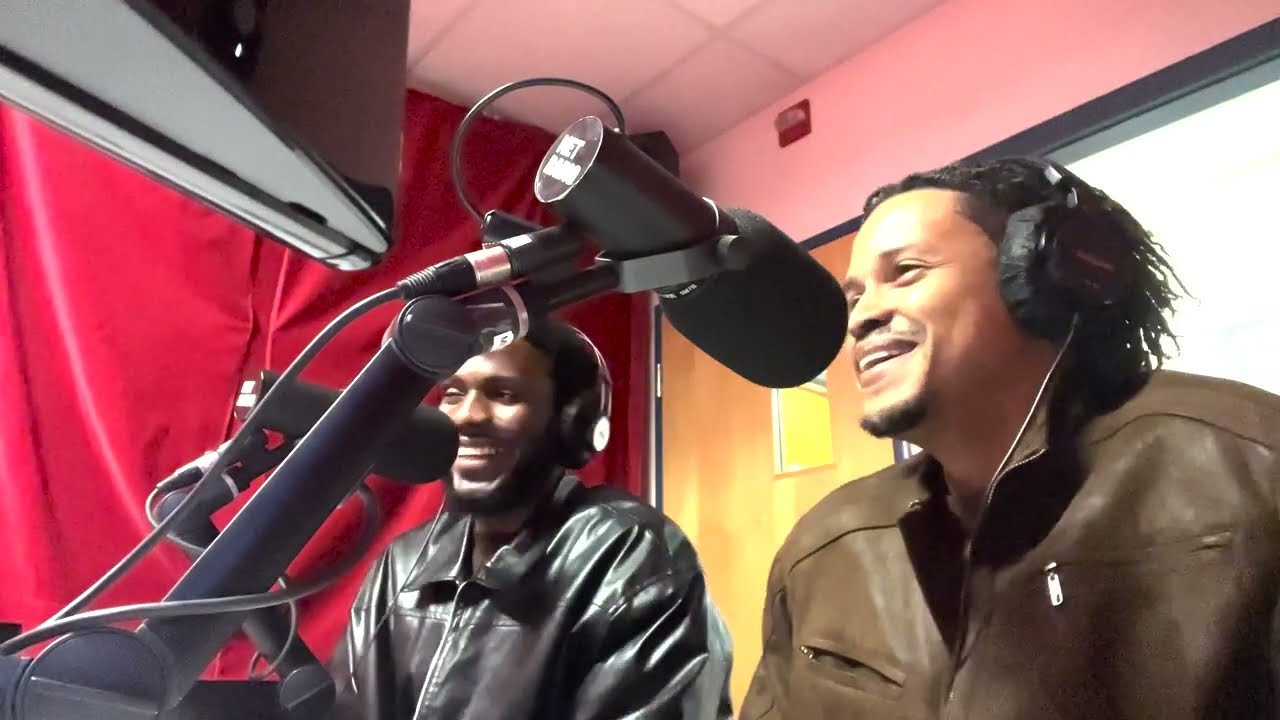
EMIDIO LOPES x JEVON BORELAND INTERVIEW with MET RADIO

Interview w Director, Producer Jevon Boreland On Thriller, Drama Canadian Film “Welcome”
INTERVIEW WITH TV DEBATES
WITH THE DIRECTOR AND CAST


Welcome stands out for its reliance on psychological ambiguity and shades of grey rather than clear heroes or villains. How did you intentionally craft the script and direct the performances to keep viewers questioning everyone's motivations and sympathies until the end?
JEVON: I think what we were really trying to do while crafting the script was live in that grey area between heroes and villains, and explore how people perceive them. For me, my go-to theme is always perception; the idea that the way one person sees something can be completely different from the way someone else sees it. As people, we have to respect that. Everyone has their own opinions and sometimes it's not about someone being right or wrong.
With this story, we take an extreme situation that could happen in real life and we explore the different viewpoints surrounding it. Everyone has their perspective. The tagline of the film is "we're all villains in someone's story" and I really wanted to play with that idea. The film leans more into psychological tension rather than outright terror. I wanted it to unfold in a way where the audience doesn't always know whose side they're on. Ideally, viewers can make arguments for multiple perspectives and think, "that's a really good point, I hadn't looked at it that way before." Someone might walk into the theatre with one perspective and leave with another, or at the very least leave with a deeper understanding. They don't have to agree with every viewpoint, but they can understand where the characters are coming from.
Another important aspect for me was making the characters empathetic. I wanted the audience to sit with their motivations. I wanted there to be real depth and weight to the characters and to the reasons behind what they do.
The film dives into heavy themes like impending parenthood, past secrets resurfacing, and moral ambiguity in a high-stakes survival scenario. What drew each of you to this script, and how did you both approach balancing the psychological depth with the thriller elements to keep the audience guessing about who's truly "overstaying their welcome"?
JEVON: I think there's a natural balance between psychological depth and the thriller genre - they complement each other very well. What I really wanted to do with this film was tell a story that carried weight and depth, something audiences could relate to from multiple perspectives and angles. The subject matter was meant to be hard-hitting. I didn't want it to be an easy pill to swallow. I wanted to create something that would truly grab people's attention and make them think.
When Emidio first read the script, one of the things he said was "it's bold, and if we're going to go there, let's really go there." That perfectly captured the intention behind the project. I've always loved the thriller genre, and I've also always loved drama for the depth it offers and the way it encourages audiences to think more deeply about a story. What I wanted to do here was combine those two elements. My goal was to create a story with the emotional weight and substance you might find in a strong drama - something that could stand on its own without relying on the thrills for excitement, and then layer the thriller elements on top of it.
Sometimes thrillers can fall into familiar clichés, but my intention was to avoid that by grounding the story in real substance. That approach reflects how I try to make all of my films, regardless of genre. I always want there to be something meaningful at the core. I wasn't interested in making just a popcorn movie. Those films can absolutely be fun and entertaining, but with this project, I wanted to give the audience an experience that might make them uncomfortable at times, while also encouraging them to reflect and think. And if they happen to feel scared along the way, then that's simply a bonus.
What's your favorite scene or dynamic that shows the switch from romance to survival thriller?
EMIDIO: My favourite scene, the one that really shows the shift from romance into thriller, would have to be Scene 13 - where everything starts turning left. When you read that scene, you start to feel the tension that has been building up, and from Darren's perspective, you begin to understand what Millie's objective is in that moment. Darren is slightly intoxicated, and Sasha and Eric aren't present in the room, which makes him particularly vulnerable.
Since Welcome marks your fourth film together, how has your working relationship evolved over these projects? What was a specific moment during the making of Welcome - whether in preparation, on set, or in post-production - where that history really helped bring something special to the character of Darren or the overall tension in the story?
EMIDIO: For me, that's the moment where the dynamic really begins to change. When Sasha and Eric return and the story moves from Scene 13 into Scene 14 - what I think of as the reveal sequence - the tone shifts completely. That's where survival instinct really starts to kick in for Darren. He's suddenly placed in a position where he has very little control, and the vulnerability of that moment becomes very real. I remember being on set that day, and it was actually quite difficult to sit through that scene as a man. The emotional weight of it was intense. For me, it was really about giving Darren a genuine arc and approaching the role without thinking of it as a thriller. I think one of the common traps with high-intensity films is that actors can sometimes lean into the genre too heavily. Instead, I tried to play against that and let the writing guide me in terms of when the shift should naturally happen.
My intention was to approach Darren as someone who has no idea that anything dangerous is unfolding around him. He isn't anticipating the situation escalating the way it does. That lack of awareness felt important to me because it mirrors real life. Often, we don't immediately assume the worst in a situation. Sometimes, we only start to recognize the signs gradually, and other times we even ignore them because the possibility of something being wrong is too frightening to confront. There are moments in everyday life that feel similar. You might hear a noise at home and think, "I should check the door," but then you tell yourself it's probably nothing. You convince yourself everything is fine because you don't want anything bad to be happening. I approached Darren from that perspective - someone who simply doesn't want to believe that anything is wrong. A lot of that also comes from his personality. Darren is an optimistic person; he moves through the world with that outlook. So when the tension begins to rise, it isn't something he's actively preparing for. It's something that slowly confronts him as the situation unfolds. That mindset was really my point of view when approaching the character.


Millie is enigmatic and quietly complicit in the escalating tension - how did you develop her character's motivations and the subtle ways she contributes to the couple's discomfort without overt dialogue?
BRIANNA: The whole process was quite collaborative. There were clues in the script Jevon wrote that suggested Millie was a bit of a play girl, someone more motivated by financial security than love or depth. There were elements between the lines that indicated by Millie choosing Eric as a partner she made a choice to forego a deeper more meaning-filled life and opted to exist as a well-groomed trophy for him. Which when extrapolated, resulted in her having escapist tendencies; mischievous and trouble seeking to feel alive, while existing in a gilded cage. It seemed to me that she was intelligent enough to pursue whatever she wanted in life but chose the "easy" button, which caused her to metaphorically switch off her survival brain for unmotivated complacency, which for some, would be quite boring. Hence, why she's pushed her prison walls out as far as Eric allows her and she lives with that choice, for better or for worse. I think that in contrast to the more healthy relationship and personhood that the other couple portrays, it highlighted Millie's self-destructive nature, which naturally created discomfort within the scenes.
In a film full of moral grey areas, what drew you to Millie, and how did you collaborate with Emmanuel Kabongo to create that eerie husband-wife synergy that heightens the psychological pressure?
BRIANNA: I'll start by saying, I really like Millie. I know her and I've felt her deeply.
In this life, I feel blessed to have chosen love, true friendship and being the steward of an exciting journey within a fun and balanced partnership. However, had I not been more intentional with my life, I likely would have been her or a version of her. I was drawn to her because she resonated with who I might have been had I made other choices in life, if I chose an overly soft existence with a partner who has exceptional wealth but lacks depth and emotional accessibility. I've experienced the "gilded cage effect" with a wealthy but emotionally disconnected partner and I could think of nothing more terrifying to my soul than carrying that existence for the rest of my life.
Working with Emmanuel Kabongo is truly a treat. We've been friends for years and true artists in our own rights, so we have tremendous respect for each other within our creativity. During filming, Emmanuel had a goal to do something different each take to keep an element of surprise and reactivity within the performance. So, when the cameras started rolling, he kept springing all of these brilliantly different moments on me; some were sweet, some were sensual and some were down-right cringey, so much so, they'd send Emidio into a fit of laughter, and I'd just try my best to hold it all together. As the improvisor I am, I leaned into it, built on the moment and filled any empty space with playful nuance.
Jevon is a wonderful director to work for; he has a lot of respect for his fellow artists. He'd add shape and give specific notes where he felt it necessary but he gave us a colosseum of freedom to play.
Sasha is at the emotional center of the story-balancing joy over her pregnancy with growing fear and suspicion. How did you approach portraying her vulnerability while keeping her strength and agency intact in those high-tension moments?
SHAILENE: Pregnancy is an inherently exciting and vulnerable time. I was three months postpartum when I shot this, still very much in the thick of my fourth trimester, so all of those emotions pertaining to my lived and imagined experiences for Sasha were very real. Emmanuel Kabongo and Emidio Lopes are such strong, grounded and present actors that it was almost a cake walk for me just reacting to what they were offering.
The film thrives on psychological ambiguity rather than overt horror. What was the most challenging part of conveying Sasha's internal conflict and shifting perceptions of the other characters?
SHAILENE: It wasn't so much of a challenge as it was a collaboration with Emmanuel and Emidio for our respective backstories. We knew that it was meant to be ambiguous to the viewer, but we still needed to be on the same page with the stories that we were telling. My sole focus was to tell Sasha's truth instead 'trying' to be liked by making a decision that may appease the audience.


Eric is one of the most compelling "antagonists" because he's not purely villainous - there's menace mixed with sympathy. How did you find that balance to make him feel real and unpredictable rather than cartoonishly threatening?
Finding the balance with Eric came from trusting the director's vision. Jevon created a character who is complex yet understandable in so many ways. Recognizing that there are people in this world who face the same circumstances Eric faces in Welcome gave me the opportunity to empathize with the character.
Your performance has been praised for straddling charm and unease. What was it like playing off the other actors in those tense, drawn-out "helpful" interactions that build the dread?
I want to give credit to the cast, who came prepared to work and play, allowing my take on Eric to complement each of them. It was a treat and a blessing to work alongside professionals who were open-minded and creatively in tune with what makes a collaboration successful. It also didn't hurt that some of the cast members are friends I've known for a while and whose work I respect. It's always helpful collaborating with people you can trust. Teamwork made the dream work.